Composting Endings Ritual
Composting Endings Ritual
What happens when we compost endings with creativity and compassion?
What happens when we compost endings with creativity and compassion?
Project Overview
Project Overview
Team
Team
Morgan Bath
Jillian Harris
Morgan Bath
Jillian Harris
Morgan Bath
Jillian Harris
My Role
My Role
This workshop was co-facilitated and developed through a deeply collaborative process.
Drawing on Jillian’s graduate research as the conceptual foundation, I contributed workshop design and facilitation expertise, working closely with her throughout the full lifecycle of the project. Together, we shaped how the research could be translated into an embodied, participatory experience; designing the structure, flow, prompts, and ritual elements in conversation with one another.
We then facilitated the workshop together, holding the space collaboratively and adapting in real time to the needs and energy of the group.
This workshop was co-facilitated and developed through a deeply collaborative process.
Drawing on Jillian’s graduate research as the conceptual foundation, I contributed workshop design and facilitation expertise, working closely with her throughout the full lifecycle of the project. Together, we shaped how the research could be translated into an embodied, participatory experience; designing the structure, flow, prompts, and ritual elements in conversation with one another.
We then facilitated the workshop together, holding the space collaboratively and adapting in real time to the needs and energy of the group.
This workshop was co-facilitated and developed through a deeply collaborative process.
Drawing on Jillian’s graduate research as the conceptual foundation, I contributed workshop design and facilitation expertise, working closely with her throughout the full lifecycle of the project. Together, we shaped how the research could be translated into an embodied, participatory experience; designing the structure, flow, prompts, and ritual elements in conversation with one another.
We then facilitated the workshop together, holding the space collaboratively and adapting in real time to the needs and energy of the group.
Project Overview
Endings are often framed as failures, losses, or points of rupture. This project offered a different proposition: that endings could be tended, honored, and composted becoming fertile ground for renewal.
Rituals of Composting: Presence and Purpose in Endings was a participatory, embodied workshop that reframed endings as living transitions that was offered publicly at the Association of Professional Futurists (APF) Conference on the Futures of Creativity and Compassion. Drawing on ritual, storytelling, and somatic practice, the workshop invited participants to slow down, reflect, and engage endings with care without rushing toward resolution or closure.
The project was inspired by Jillian Harris’ graduate research into organizational lifecycles, leadership, and loss in the Canadian performing arts sector. That research explored how performing arts nonprofits navigate change, particularly moments of sunsetting and transition, and challenged dominant narratives that equate endings with failure. Instead, it asked what might become possible if impermanence were embraced as a marker of success, and if legacy were understood through care, redistribution, and renewal.
Translating this research into lived experience, the workshop guided participants through an embodied journey of reflecting on an ending they had experienced albeit personal, professional, or collective.
Participants were invited to:
Reflect on an ending through guided journaling, somatic, and imaginative prompts
Create a symbolic artifact using biodegradable and organic materials
Offer that artifact back to a shared altar: a bed of earth surrounded by flowers and fresh harvest
The ritual was intentionally simple, grounded, and slow. It made space for grief, gratitude, release, and possibility, while inviting participants to remain in process rather than striving for clarity or completion. As a guiding principle, participants were encouraged to “speak in draft” and let go of perfection, trust intuition, and honor becoming rather than arrival.
At its core, the project was informed by key themes emerging from the research:
Impermanence and cycles
Time and presence
Stewardship and care
Ritual and meaning-making
Nature, interdependence, and soft structures
The performing arts have long understood that the most powerful moments are unrepeatable. This project asked: What might organizations, communities, and futures practices learn from that wisdom?
Endings are often framed as failures, losses, or points of rupture. This project offered a different proposition: that endings could be tended, honored, and composted—becoming fertile ground for renewal.
Rituals of Composting: Presence and Purpose in Endings was a participatory, embodied workshop that reframed endings as living transitions. Drawing on ritual, storytelling, and somatic practice, the workshop invited participants to slow down, reflect, and engage endings with care—without rushing toward resolution or closure.
The project was inspired by Jillian Harris’ graduate research into organizational lifecycles, leadership, and loss in the Canadian performing arts sector. That research explored how performing arts nonprofits navigate change, particularly moments of sunsetting and transition, and challenged dominant narratives that equate endings with failure. Instead, it asked what might become possible if impermanence were embraced as a marker of success, and if legacy were understood through care, redistribution, and renewal.
Translating this research into lived experience, the workshop guided participants through an embodied journey of reflecting on an ending they had experienced—personal, professional, or collective. Participants were invited to:
Reflect on an ending through guided journaling, somatic, and imaginative prompts
Create a symbolic artifact using biodegradable and organic materials
Offer that artifact back to a shared altar: a bed of earth surrounded by flowers and fresh harvest
The ritual was intentionally simple, grounded, and slow. It made space for grief, gratitude, release, and possibility, while inviting participants to remain in process rather than striving for clarity or completion. As a guiding principle, participants were encouraged to “speak in draft”—to let go of perfection, trust intuition, and honor becoming rather than arrival.
At its core, the project was informed by key themes emerging from the research:
Impermanence and cycles
Time and presence
Stewardship and care
Ritual and meaning-making
Nature, interdependence, and soft structures
The performing arts have long understood that the most powerful moments are unrepeatable. This project asked: What might organizations, communities, and futures practices learn from that wisdom?
Endings are often framed as failures, losses, or points of rupture. This project offered a different proposition: that endings could be tended, honored, and composted—becoming fertile ground for renewal.
Rituals of Composting: Presence and Purpose in Endings was a participatory, embodied workshop that reframed endings as living transitions. Drawing on ritual, storytelling, and somatic practice, the workshop invited participants to slow down, reflect, and engage endings with care—without rushing toward resolution or closure.
The project was inspired by Jillian Harris’ graduate research into organizational lifecycles, leadership, and loss in the Canadian performing arts sector. That research explored how performing arts nonprofits navigate change, particularly moments of sunsetting and transition, and challenged dominant narratives that equate endings with failure. Instead, it asked what might become possible if impermanence were embraced as a marker of success, and if legacy were understood through care, redistribution, and renewal.
Translating this research into lived experience, the workshop guided participants through an embodied journey of reflecting on an ending they had experienced—personal, professional, or collective. Participants were invited to:
Reflect on an ending through guided journaling, somatic, and imaginative prompts
Create a symbolic artifact using biodegradable and organic materials
Offer that artifact back to a shared altar: a bed of earth surrounded by flowers and fresh harvest
The ritual was intentionally simple, grounded, and slow. It made space for grief, gratitude, release, and possibility, while inviting participants to remain in process rather than striving for clarity or completion. As a guiding principle, participants were encouraged to “speak in draft”—to let go of perfection, trust intuition, and honor becoming rather than arrival.
At its core, the project was informed by key themes emerging from the research:
Impermanence and cycles
Time and presence
Stewardship and care
Ritual and meaning-making
Nature, interdependence, and soft structures
The performing arts have long understood that the most powerful moments are unrepeatable. This project asked: What might organizations, communities, and futures practices learn from that wisdom?
The Experience
The Experience
The workshop unfolded as a carefully held, three-hour arc that balanced structure with spaciousness, allowing participants to move gently between reflection, embodiment, creativity, and collective ritual.
The workshop unfolded as a carefully held, three-hour arc that balanced structure with spaciousness, allowing participants to move gently between reflection, embodiment, creativity, and collective ritual.
The workshop unfolded as a carefully held, three-hour arc that balanced structure with spaciousness, allowing participants to move gently between reflection, embodiment, creativity, and collective ritual.
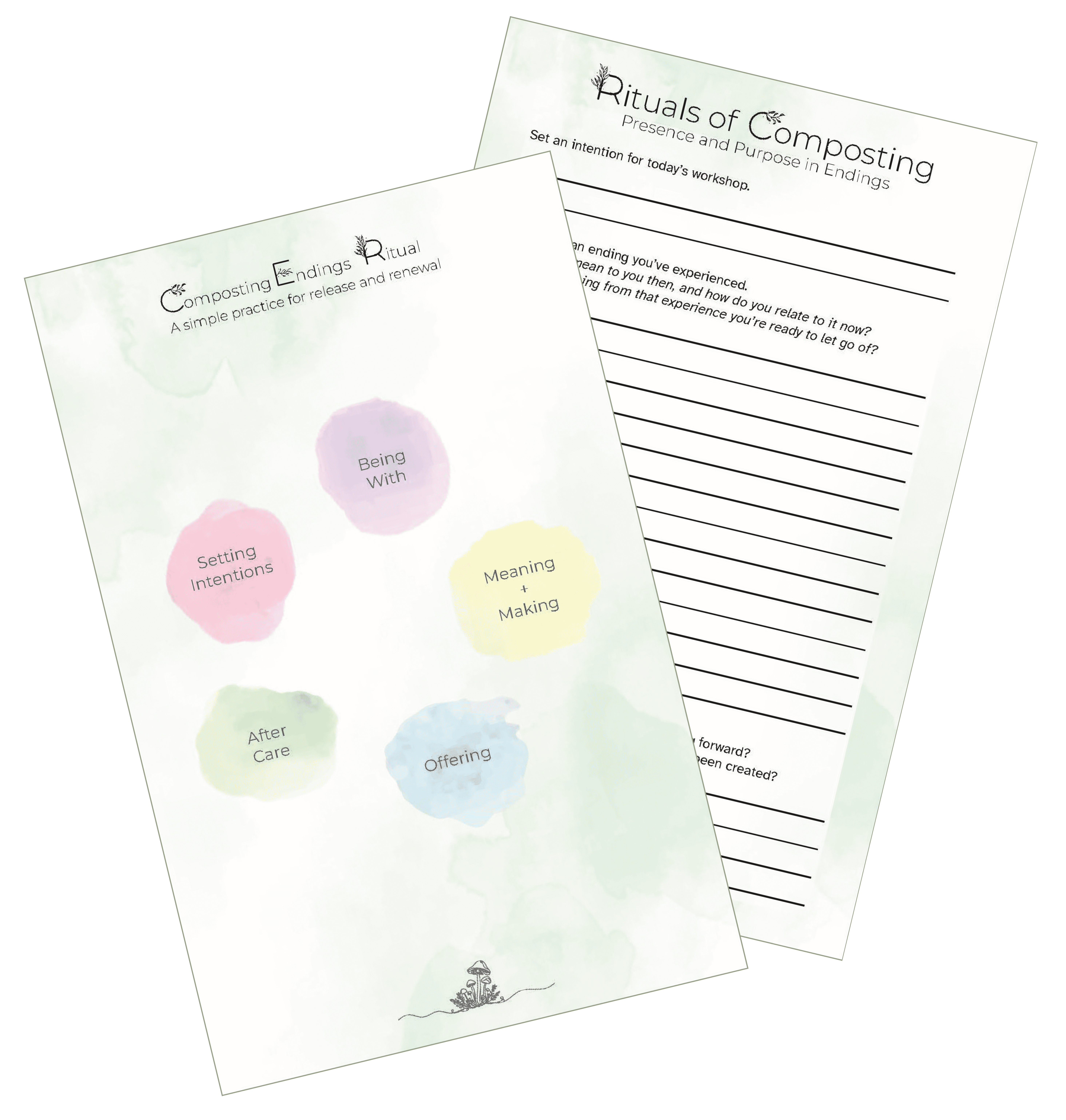
Participants were welcomed into the space with a quiet intention-setting practice. Upon arrival, each person was invited to settle at a shared table, where a journal card awaited them. The opening invitation asked participants to write an intention to anchor themselves in the space and naming what they hoped to be present with during the workshop.
The session opened with facilitator introductions and a land acknowledgment, situating the gathering on the unceded territories of the Anishinaabe, Haudenosaunee, and Huron-Wendat peoples. This grounding connected the themes of interdependence, relationship, and return-to-the-land that would later be embodied through the composting ritual itself.
Participants were welcomed into the space with a quiet intention-setting practice. Upon arrival, each person was invited to settle at a shared table, where a journal card awaited them. The opening invitation asked participants to write an intention to anchor themselves in the space and naming what they hoped to be present with during the workshop.
The session opened with facilitator introductions and a land acknowledgment, situating the gathering on the unceded territories of the Anishinaabe, Haudenosaunee, and Huron-Wendat peoples. This grounding connected the themes of interdependence, relationship, and return-to-the-land that would later be embodied through the composting ritual itself.
Participants were welcomed into the space with a quiet intention-setting practice. Upon arrival, each person was invited to settle at a shared table, where a journal card awaited them. The opening invitation asked participants to write an intention to anchor themselves in the space and naming what they hoped to be present with during the workshop.
The session opened with facilitator introductions and a land acknowledgment, situating the gathering on the unceded territories of the Anishinaabe, Haudenosaunee, and Huron-Wendat peoples. This grounding connected the themes of interdependence, relationship, and return-to-the-land that would later be embodied through the composting ritual itself.
The research grounding followed, situating the workshop within explorations of organizational lifecycles, impermanence, and endings particularly within the performing arts. Participants were invited to consider how Western narratives of shame, failure, and permanence shape our relationship to endings, and how ecological metaphors like composting can open alternative imaginaries rooted in regeneration, redistribution, and care. Ritual was framed not as spectacle, but as an embodied language of gesture, rhythm, presence, and intentional meaning-making.
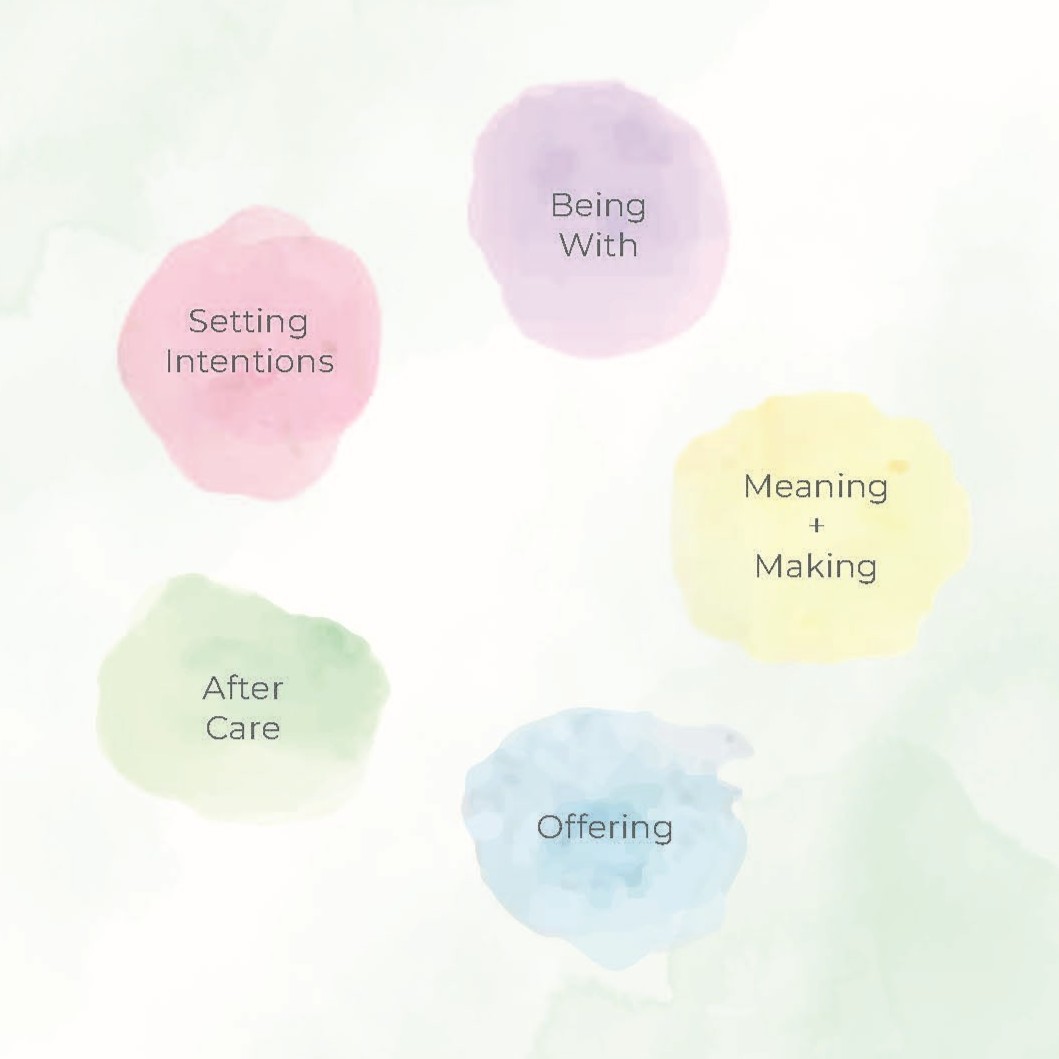
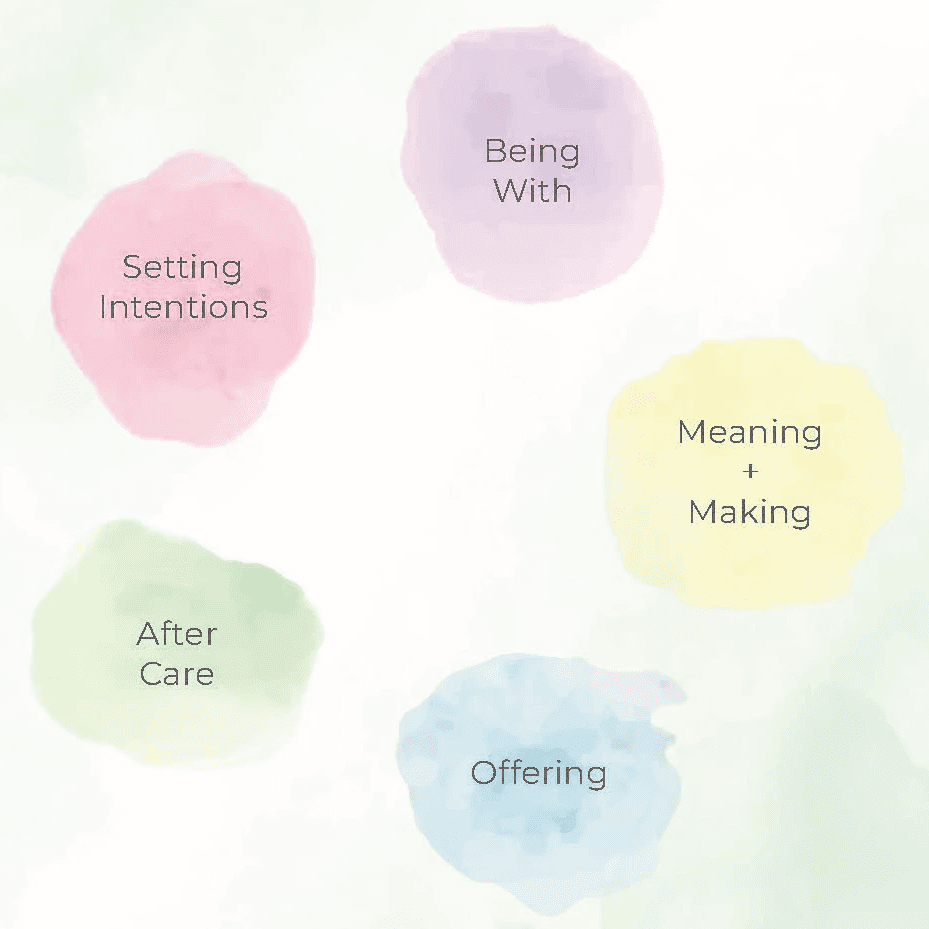
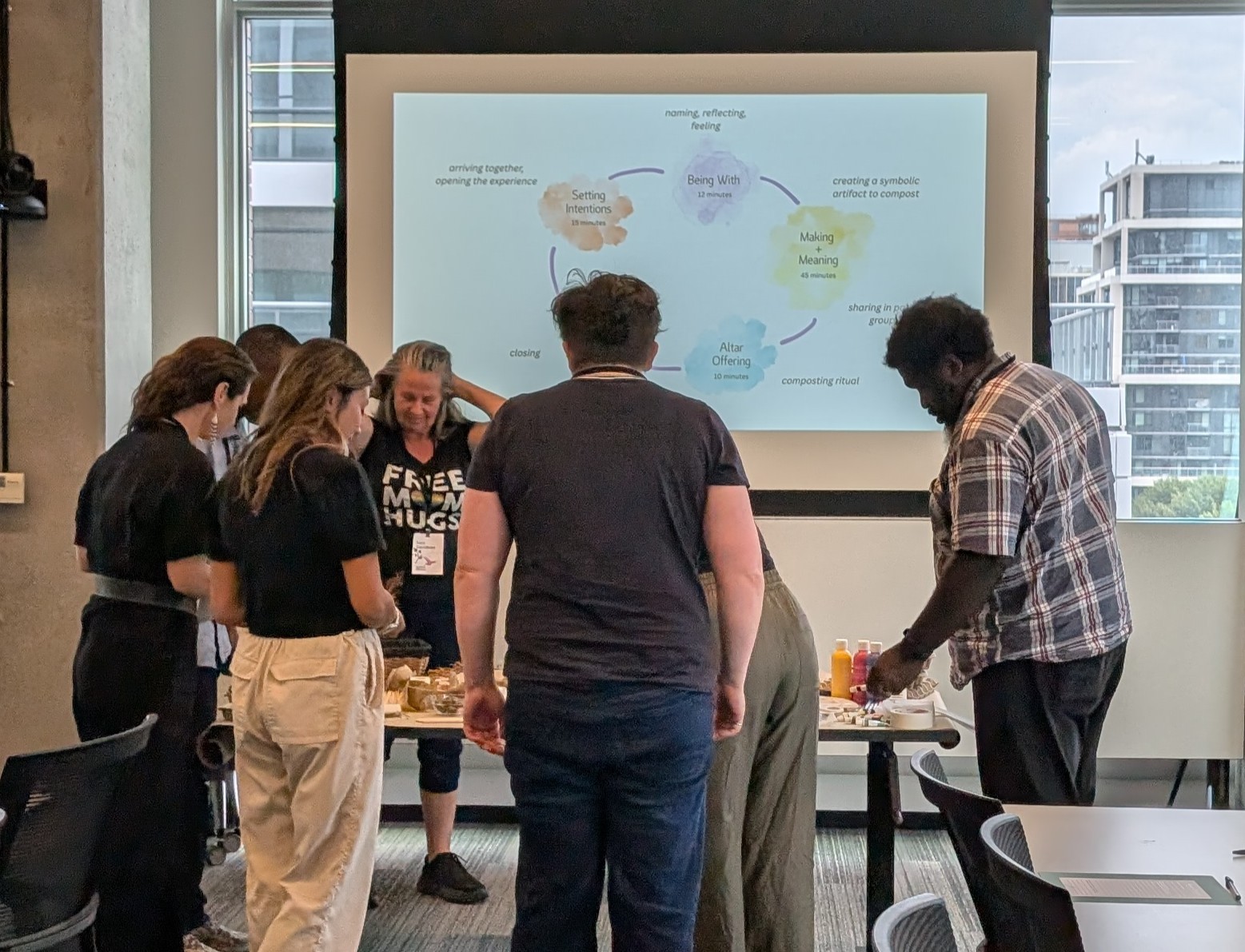
Participants were then oriented to the session map: intention setting, being with, making meaning, sharing, ritual, and aftercare. Clear group agreements were co-established, emphasizing consent, confidentiality, emotional autonomy, and non-judgmental listening. The space was explicitly framed as non-therapeutic, with facilitators offering a container rather than intervention, and participants retaining full agency over what they chose to share or hold privately.
The embodied portion of the workshop began with a journaling prompt inviting participants to reflect on an ending they had experienced, how they related to it then and now, and what they might be ready to release. This was followed by a guided somatic exploration, inviting participants to notice where this story lived in their bodies, and to move, rest, or ground themselves in ways that felt supportive.
The research grounding followed, situating the workshop within explorations of organizational lifecycles, impermanence, and endings particularly within the performing arts. Participants were invited to consider how Western narratives of shame, failure, and permanence shape our relationship to endings, and how ecological metaphors like composting can open alternative imaginaries rooted in regeneration, redistribution, and care. Ritual was framed not as spectacle, but as an embodied language of gesture, rhythm, presence, and intentional meaning-making.
Participants were then oriented to the session map: intention setting, being with, making meaning, sharing, ritual, and aftercare. Clear group agreements were co-established, emphasizing consent, confidentiality, emotional autonomy, and non-judgmental listening. The space was explicitly framed as non-therapeutic, with facilitators offering a container rather than intervention, and participants retaining full agency over what they chose to share or hold privately.
The embodied portion of the workshop began with a journaling prompt inviting participants to reflect on an ending they had experienced, how they related to it then and now, and what they might be ready to release. This was followed by a guided somatic exploration, inviting participants to notice where this story lived in their bodies, and to move, rest, or ground themselves in ways that felt supportive.
The research grounding followed, situating the workshop within explorations of organizational lifecycles, impermanence, and endings particularly within the performing arts. Participants were invited to consider how Western narratives of shame, failure, and permanence shape our relationship to endings, and how ecological metaphors like composting can open alternative imaginaries rooted in regeneration, redistribution, and care. Ritual was framed not as spectacle, but as an embodied language of gesture, rhythm, presence, and intentional meaning-making.
Participants were then oriented to the session map: intention setting, being with, making meaning, sharing, ritual, and aftercare. Clear group agreements were co-established, emphasizing consent, confidentiality, emotional autonomy, and non-judgmental listening. The space was explicitly framed as non-therapeutic, with facilitators offering a container rather than intervention, and participants retaining full agency over what they chose to share or hold privately.
The embodied portion of the workshop began with a journaling prompt inviting participants to reflect on an ending they had experienced, how they related to it then and now, and what they might be ready to release. This was followed by a guided somatic exploration, inviting participants to notice where this story lived in their bodies, and to move, rest, or ground themselves in ways that felt supportive.
From there, participants transitioned into a making phase. Using biodegradable and organic materials, they were invited to create a symbolic artifact representing the ending they had been reflecting on. Emphasis was placed on intuition and impulse—allowing hands and materials to lead, without concern for outcome, explanation, or correctness.
Small-group sharing followed, where participants gathered in pairs or trios to share reflections if they wished. This storytelling moment was intentionally brief and spacious, followed by a full-group conversation exploring what emerged through the embodied and creative process, and how these insights related to futures practice, leadership, and change.
From there, participants transitioned into a making phase. Using biodegradable and organic materials, they were invited to create a symbolic artifact representing the ending they had been reflecting on. Emphasis was placed on intuition and impulse—allowing hands and materials to lead, without concern for outcome, explanation, or correctness.
Small-group sharing followed, where participants gathered in pairs or trios to share reflections if they wished. This storytelling moment was intentionally brief and spacious, followed by a full-group conversation exploring what emerged through the embodied and creative process, and how these insights related to futures practice, leadership, and change.
From there, participants transitioned into a making phase. Using biodegradable and organic materials, they were invited to create a symbolic artifact representing the ending they had been reflecting on. Emphasis was placed on intuition and impulse—allowing hands and materials to lead, without concern for outcome, explanation, or correctness.
Small-group sharing followed, where participants gathered in pairs or trios to share reflections if they wished. This storytelling moment was intentionally brief and spacious, followed by a full-group conversation exploring what emerged through the embodied and creative process, and how these insights related to futures practice, leadership, and change.
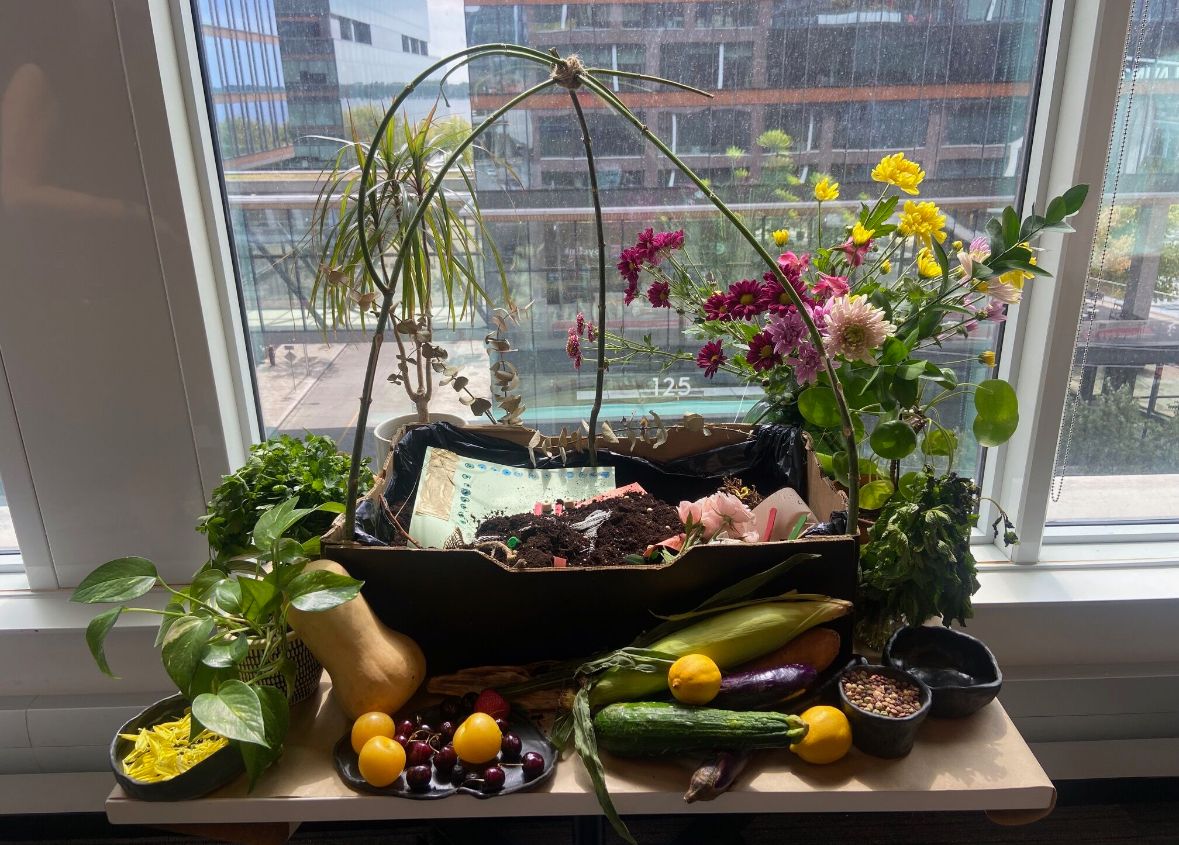
The workshop culminated in a collective composting ritual. Participants who wished to take part formed a semi-circle around a shared altar: a bed of soil surrounded by flowers, fruit, and symbols of abundance. A threshold of petals marked the ritual space. Through collective breath, silence, gesture, and spoken or unspoken offerings, participants buried, scattered, or released their artifacts into the soil. Each person was invited to take a flower in return, marking reciprocity and renewal. Participation was always optional, with multiple pathways offered for presence and consent.
The ritual closed with shared breath and silence, followed by intentional aftercare. Participants were guided through a grounding body scan, given time to complete a final journaling prompt, and invited to reconnect gently with one another over tea. The session concluded with collective gratitude, resources for ongoing support, and space for feedback and conversation. The altar and its contents were later composted, completing the lifecycle begun in the workshop.
The workshop culminated in a collective composting ritual. Participants who wished to take part formed a semi-circle around a shared altar: a bed of soil surrounded by flowers, fruit, and symbols of abundance. A threshold of petals marked the ritual space. Through collective breath, silence, gesture, and spoken or unspoken offerings, participants buried, scattered, or released their artifacts into the soil. Each person was invited to take a flower in return, marking reciprocity and renewal. Participation was always optional, with multiple pathways offered for presence and consent.
The ritual closed with shared breath and silence, followed by intentional aftercare. Participants were guided through a grounding body scan, given time to complete a final journaling prompt, and invited to reconnect gently with one another over tea. The session concluded with collective gratitude, resources for ongoing support, and space for feedback and conversation. The altar and its contents were later composted, completing the lifecycle begun in the workshop.
The workshop culminated in a collective composting ritual. Participants who wished to take part formed a semi-circle around a shared altar: a bed of soil surrounded by flowers, fruit, and symbols of abundance. A threshold of petals marked the ritual space. Through collective breath, silence, gesture, and spoken or unspoken offerings, participants buried, scattered, or released their artifacts into the soil. Each person was invited to take a flower in return, marking reciprocity and renewal. Participation was always optional, with multiple pathways offered for presence and consent.
The ritual closed with shared breath and silence, followed by intentional aftercare. Participants were guided through a grounding body scan, given time to complete a final journaling prompt, and invited to reconnect gently with one another over tea. The session concluded with collective gratitude, resources for ongoing support, and space for feedback and conversation. The altar and its contents were later composted, completing the lifecycle begun in the workshop.